
Yes, coconut oil clogs drains. It melts at roughly 76 degrees, so it pours down the sink as a clear liquid. Once it meets cool pipe walls, it turns back into a waxy white solid and starts catching everything else that follows it.
The fix is simple: never pour it down any drain, hot water or not. This guide covers why it sticks, how to dispose of it, what you can safely try on a slow drain, and when a professional drain cleaning is the better call.
Most Westminster neighborhoods were built in the 1960s, and the median home dates to about 1971. Older kitchen drain lines tend to have rougher interior walls and fewer smooth bends, so grease finds more places to cling. If your home is that age and the kitchen sink drains slowly, treat any fat in the pipe as a likely cause before you blame the main line.
Why coconut oil turns into a plug
Coconut oil is about 80 to 90 percent saturated fat. That is why it stays solid in a jar on the counter and melts only when warmed. Your drain pipe is not warm. Even if the oil goes down hot, the pipe walls and the cold water behind it cool it within a few feet.
Once the oil sets, it forms a thin sticky film. Food scraps, hair, coffee grounds and soap scum stick to that film. Over weeks the opening shrinks, the water slows, and eventually a plug forms that a plunger cannot move.
Running hot water after pouring oil only moves the problem further down the line. The grease cools in the horizontal run under the house or in the yard, where it is harder to reach and costs more to clear.
How coconut oil compares with other kitchen fats
People often think plant oils are safe and animal fats are not. That is only half true. Liquid oils like olive or canola stay fluid longer, but they still cling to pipe walls and bind with other residue. Coconut oil is worse because it solidifies at a higher temperature.
| Fat or oil | State at room temperature | Drain risk | Better disposal |
|---|---|---|---|
| Coconut oil | Solid below about 76 F | High, hardens quickly | Cool, wipe, trash |
| Bacon grease or lard | Solid | High | Can with lid, trash |
| Butter | Soft solid | Medium to high | Wipe pan, trash |
| Olive or canola oil | Liquid | Medium, coats pipe walls | Sealed container, trash |
| Soapy dish water with a little oil | Liquid | Low if small amounts | Drain with plenty of water |
What to do with used coconut oil instead
Let the pan cool until the oil is warm but not hot. Wipe it out with a paper towel, and toss the towel in the trash. For larger amounts, pour the oil into an empty can, jar or milk carton and let it harden.
Seal the container and put it in the trash. Do not put it in the compost bin unless your local program accepts cooking oil, and do not flush it down the toilet either. The toilet drain is just as sensitive as the kitchen one.
Safe grease habits for the kitchen
- Wipe greasy pans with a paper towel before washing
- Keep an old can or jar near the stove for oil
- Scrape plates into the trash, not the sink
- Use a sink strainer to catch food bits
- Never pour oil into the toilet or a floor drain
- Run warm soapy water for 20 seconds after washing dishes
Signs coconut oil is already building up in your pipes
Grease clogs build slowly, so the early signs are easy to miss. Look for a kitchen sink that drains a little slower each week, gurgling after the dishwasher runs, or a sour smell from the drain that does not go away after cleaning the strainer.
A full blockage usually shows up as standing water in the kitchen sink. If the washer or a bathroom sink on the same line also backs up, the plug may be past the kitchen branch.
- Slow draining that returns within days of a cleaning
- Gurgling or bubbling when water runs elsewhere
- Greasy, sour or rotten odor from the sink drain
- Water pooling around the dishwasher
- White or yellow waxy bits on the strainer or in the trap
Safe things to try before you call
For a mild grease slowdown, start with the trap. Place a bucket under the curved pipe below the sink, loosen the slip nuts by hand, and let the water and sludge drain out. Scrape the trap clean and reassemble it with the washers seated flat.
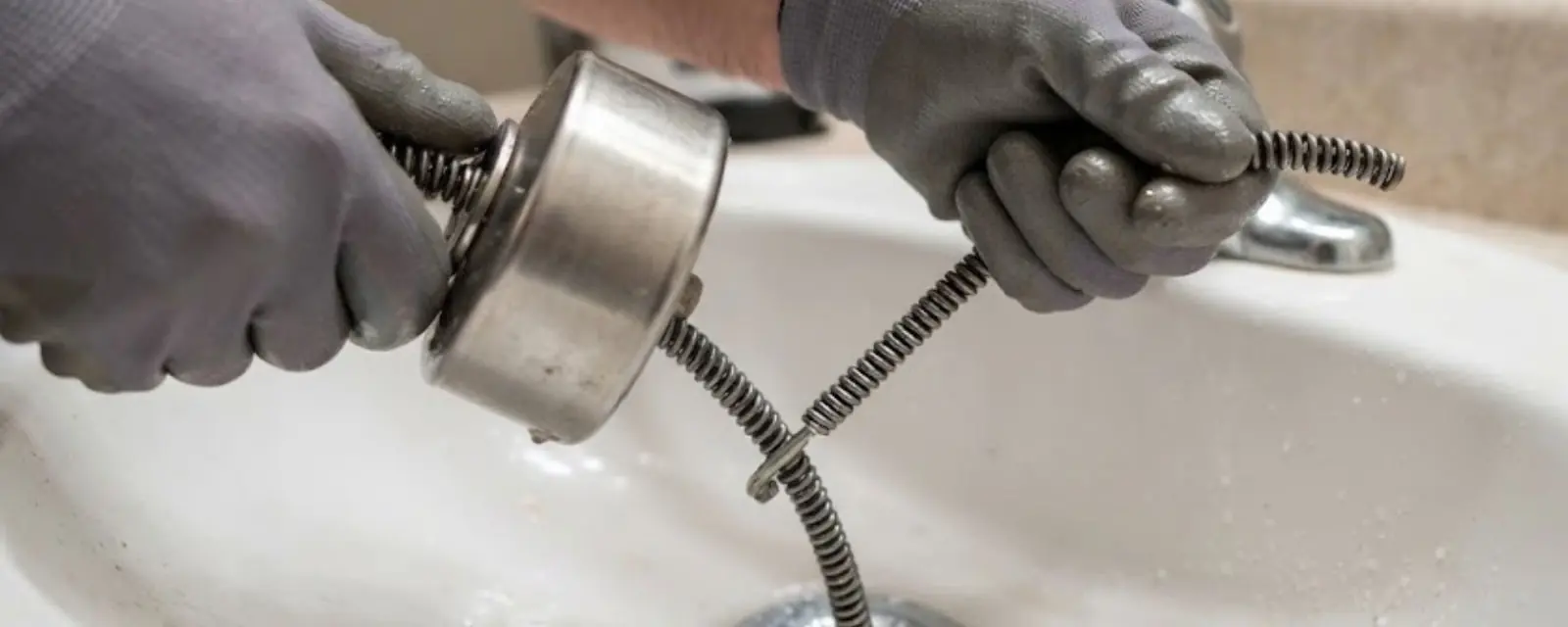
A plunger can help if you block the second sink opening with a wet rag. Use steady pushes, not wild ones. A hand-crank drain snake from a hardware store can clear a plug within the first few feet of pipe.
- 1
Clear the area
Empty the cabinet under the sink and set a bucket under the trap.
- 2
Remove and clean the trap
Unscrew the slip nuts, dump the contents in the bucket and scrape the inside clean.
- 3
Plunge the line
Reassemble, fill the sink with a few inches of water and plunge with a cup plunger for 20 seconds.
- 4
Flush with warm soapy water
Run warm (not boiling) water with dish soap for a minute and watch the flow.
Skip chemical drain openers. They rarely cut through a thick grease plug, they can damage old pipe joints, and they leave caustic liquid sitting in the line for whoever works on it next.
When a stuck drain means it is time to call a plumber
Call if the sink is still full after a plunge and a trap cleaning, if more than one fixture is slow, or if the drain backs up again within a few days. Those patterns point to grease farther down the line where a store snake cannot reach.
A plumber can run a cable through the kitchen line and clear a soft plug. For heavy, coated grease, hydro jetting uses high-pressure water to strip the pipe wall instead of just punching a hole through it. Our phone line is answered 24/7 if the sink is overflowing.
| Situation | Likely method | Why |
|---|---|---|
| Slow sink, first time | Trap cleaning and plunger | Plug is usually close to the opening |
| Standing water, repeat clog | Cable machine | Reaches past the trap into the branch line |
| Heavy coated grease, recurring | Hydro jetting | Scours the pipe wall, not just a center hole |
| Several fixtures backing up | Camera and main line cleaning | Blockage may be in the main |
How grease reaches the Midway City Sanitary District system
Everything that leaves your house flows into the Midway City Sanitary District, which serves all of Westminster and Midway City and runs four lift stations. Fat that makes it past your own pipes can harden in the sewer and add to buildup that the district has to clear. Ask the district at (714) 893-3553 if you have questions about what belongs in the system.
For you, the practical point is that grease in a shared sewer can eventually come back to your own lateral. A sewer line that backs up with several fixtures gurgling may need main sewer line cleaning rather than a kitchen fix.
If floor drains, a bathtub or a toilet back up along with the sink, stop using water and call. Pushing more water into a blocked main line can send it into the house.
Neighboring cities and shared habits
Grease habits matter the same way across Orange County. Our service area includes Midway City and nearby towns, and homeowners in Garden Grove see the same kitchen drain problems when fats go down the sink. You can see the full list of towns on our service areas page.
According to the Midway City Sanitary District, it serves all of Westminster and Midway City. Keep fats out of drains, and call the district office at (714) 893-3553 about overflows in the street.
Coconut oil and drain questions
Does hot water dissolve coconut oil in a drain?
Hot water melts it briefly, but the oil cools and hardens again a few feet down the pipe. It does not dissolve in water. Pouring hot water just relocates the grease.
Can I put a small amount of coconut oil down the sink?
A spoonful on a plate that gets washed with soap is usually carried away. Repeated small amounts build up over time. Wipe pans first and keep liquid oil out of the drain.
Does coconut oil clog bathroom drains too?
Yes. Coconut oil used on skin or hair can rinse into the shower or tub drain, mix with hair and soap scum, and form a sticky plug. Wipe off excess and use a hair catcher.
Is coconut oil a problem for Westminster homes in particular?
It is a problem anywhere, but many Westminster homes date to around 1971 and have older drain lines. Rougher pipe walls hold grease more easily, so older kitchens clog sooner.
Will a drain cleaner dissolve a coconut oil clog?
Chemical cleaners seldom clear a thick fat plug and can harm old joints. Mechanical clearing with a cable or hydro jetting is more dependable.
How do I stop the clog from coming back?
Keep fats out of the sink, use a strainer, and run warm soapy water after washing dishes. If clogs return within weeks, have the line cleaned and inspected.