
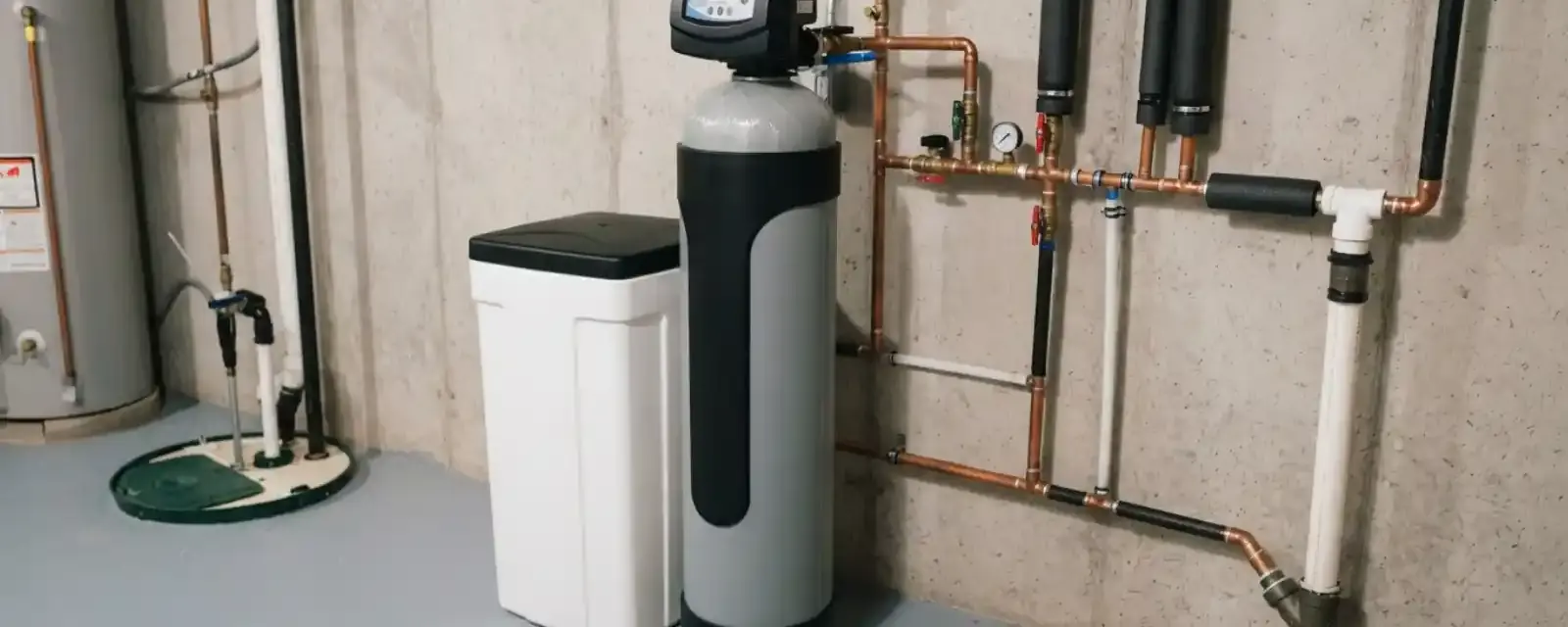
Installing water filtration starts with choosing the right type. A whole-house sediment or carbon filter protects every tap, a reverse osmosis unit polishes drinking water at one sink, and a salt-based softener handles hardness. They solve different problems, and none of them does everything.
Westminster tap water is hard, with a total hardness average of 252 mg/L, and the imported portion is chloraminated. That points to a softener for scale and a carbon or reverse osmosis filter for taste. This guide covers each type, the install steps and the maintenance schedule.
The city advises flushing taps for 30 seconds to 2 minutes after water has sat for hours. After installing a new filter, flush it the same way and run a cold tap until the water clears. That clears trapped air and fine carbon dust before you drink it. The city inventory found no lead or galvanized service lines needing replacement.
What is actually in Westminster tap water
The City of Westminster 2024 Water Quality Report, using 2023 data, lists nine groundwater wells and three imported connections. Water is usually about 75 percent groundwater and 25 percent imported. Lead at the 90th percentile was 1.31 ppb and copper was 0.198 ppm, both under action levels.
Hardness averaged 252 mg/L, or roughly 14.7 grains per gallon, with a range of 138 to 413. pH was 7.9. The practical result is scale on heaters and fixtures first, and chlorine-type taste second. Your goal sets the filter.
Because the supply mixes well water and imported water, reported hardness ranges from 138 to 413 mg/L. Size a softener for the high end of the range, not the average, so it keeps up when harder water arrives.
Matching the filter to the problem
Start with your complaint. Spots on glass and crusty showerheads point to hardness. A chemical taste or smell points to chloramine. Cloudy or gritty water points to sediment.
| Type | Removes | Does not remove | Typical location |
|---|---|---|---|
| Sediment filter | Sand, rust flakes, grit | Hardness, taste | Main line at entry |
| Carbon block | Chlorine taste, odor, some chemicals | Hardness | Main line or under sink |
| Salt-based softener | Calcium and magnesium (scale) | Chloramine, most chemicals | Main line at entry |
| Reverse osmosis | Dissolved solids, many contaminants | Nothing for whole house flow | Under kitchen sink |
Why chloramine changes the filter you buy
Imported water is chloraminated, and the city reports an average distribution chlorine residual of 0.82 ppm. Chloramine does not leave water as quickly as plain chlorine does, so a basic carbon filter may leave some taste behind.
Look for a carbon product made for chloramine, and expect a slower flow rate through it. If you want the best drinking water at one tap, a reverse osmosis system with a carbon stage is a stronger option.
Chloramine harms aquarium fish. Aquarium water needs a conditioner that handles chloramine, and a filter at the tank, not just a household sediment unit.
Softener versus filter: which one first
If the scale on your fixtures and water heater is the main problem, start with a softener. A filter will not prevent crust on the heating element.
Scale shortens the life of the tank, the heating element and the heat exchanger in a tankless heater. See our water softener and filtration page for what we install. A softener plus a small carbon filter at the kitchen sink covers most needs.
Softened water has added sodium, so many households keep the kitchen cold tap on a separate carbon or reverse osmosis line. Ask the installer to leave one unsoftened outdoor tap for watering the yard, which saves salt.
Before you buy: a short planning checklist
A little prep avoids buying the wrong unit.
Planning checklist
- Write down your main complaint: scale, taste, grit or smell
- Find the main water shutoff and the pipe size
- Measure space at the entry point, garage wall or side yard
- Locate a drain and a power outlet if a softener is planned
- Check pressure and note any weak flow already present
- Ask the City Building Division whether a permit applies
How installation works step by step
A whole-house install is usually a half-day to a day, depending on access. An under-sink reverse osmosis unit is often faster.
- 1
Shut off and drain
Close the main shutoff and open a faucet to relieve pressure before any pipe is cut.
- 2
Mount and plumb
Fasten the unit on a bypass, then cut in shutoff valves and connect fittings in the correct flow direction.
- 3
Connect drain and power
A softener needs a drain line with an air gap and an outlet. Reverse osmosis needs a drain saddle at the sink trap.
- 4
Flush and test
Open the system slowly, purge air, check every joint for drips and flush the media before use.
A bypass valve lets you isolate the unit without losing house water. Installers also check that existing shutoff valves close fully, since old ones may fail when disturbed.
Permits and the Building Division
The City Building Division permit worksheet lists fixtures, backflow devices and water heaters among its items. Whether a filtration install needs a permit depends on the scope, so ask before you start.
Call the Building Division at (714) 548-3254 or visit 8200 Westminster Blvd on a weekday. Asking first costs little and can prevent a stop-work surprise.
If your home is a rental or a mobile home, get the owner's or park's approval before cutting into the supply line. About 47 percent of Westminster homes are rented, so this comes up often.
Maintenance and replacement schedule
Filters only work while their media is fresh. A clogged sediment cartridge cuts flow, and an exhausted carbon block stops removing taste.
| Component | Typical interval | Sign it is due |
|---|---|---|
| Sediment cartridge | 3 to 6 months | Pressure drops or water looks cloudy |
| Carbon block | 6 to 12 months | Chemical taste returns |
| RO membrane | 2 to 3 years | Slow fill or salty taste |
| Softener salt | Check monthly | Salt level below the water line |
Common mistakes and when to call
The usual mistakes are installing a filter backward, forgetting the bypass, and buying a softener sized for a different household. Another is cutting into old copper without checking the shutoffs.
Skipping the bypass is the costly one, because a failed cartridge then cuts water to the whole house until it is repaired. Keep spare cartridges on hand so a replacement does not wait on a shipment.
A plumber can also handle plumbing installation work needed for the drain line. We serve Westminster, Midway City and nearby towns, including Garden Grove, and you can check the service areas first. Call (714) 750-8637 to talk through your setup.
According to the City of Westminster's 2024 Water Quality Report, hardness averaged 252 mg/L, pH was 7.9 and imported supply is chloraminated. Treatment equipment installs follow the California Plumbing Code (Title 24, Part 5).
Water filtration questions from Westminster homeowners
Is Westminster tap water safe to drink without a filter?
City testing reports lead and copper under the action levels. A filter is a matter of taste and scale, not a need to treat a safety problem. For specific health concerns, contact the city Water Quality line at (714) 548-3699.
What is the best filter for hard water in Westminster?
A salt-based softener removes the calcium and magnesium that cause scale. With roughly 14.7 grains per gallon on average, it is the most direct fix.
Will a filter remove chloramine?
A carbon filter made for chloramine reduces it, and reverse osmosis does too. A plain sediment filter does not.
How long does installation take?
Many whole-house installs take half a day to a full day. Under-sink units are usually quicker.
Do I need a drain for a filter?
Softeners and reverse osmosis units need a drain connection. Simple cartridge filters do not.
Can I install a filter myself?
Under-sink and countertop units are manageable for a handy homeowner. Whole-house units involve cutting pipe and are better handled by a licensed plumber.