
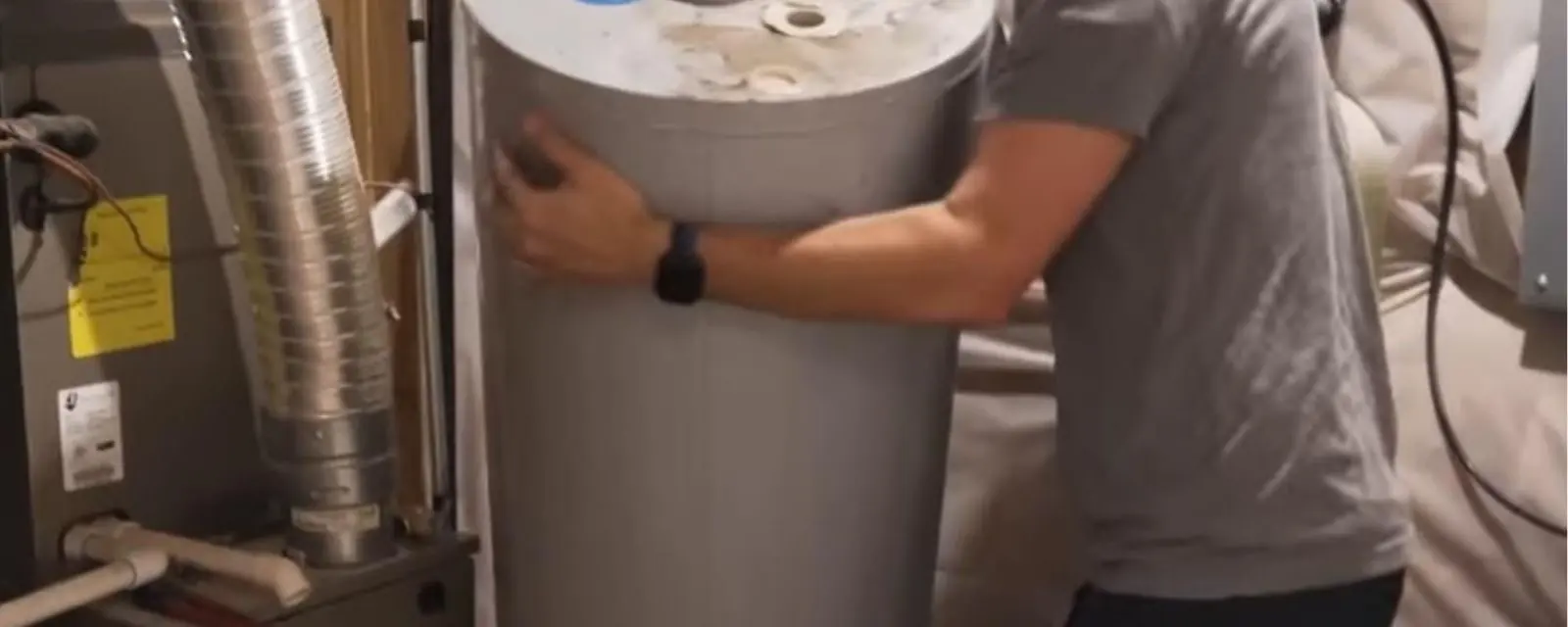
A water heater installation in Westminster usually means choosing between a gas tank, an electric tank and a tankless unit, then matching the size to your household. Most homes are served well by a 40 or 50 gallon tank, while larger families often step up to 50 or 75 gallons.
The decision does not end with the box you buy. Venting, gas line size, a drain pan, an expansion tank and earthquake straps all affect whether the job is done right. This guide walks through each piece so you know what to ask before anyone starts work.
If your current heater is already leaking or has failed, see our page on emergency water heater replacement. This article is for planned work, when you have time to compare options.
Westminster water averages 252 mg/L total hardness, roughly 14.7 grains per gallon, and most neighborhoods were built in the 1960s with a median year around 1971. That combination means older closets, older flues and scale-prone heating elements, so budget for venting checks and an annual drain or flush.
Tank, tankless or heat pump: picking the type
A standard tank heater stores hot water and keeps it warm around the clock. It costs the least to buy and is the simplest to swap into an existing closet or garage spot.
A tankless water heater heats water only when a tap opens. It saves floor space and never runs out during a long shower, but it needs a larger gas line and special venting, so the install costs more.
Heat pump models pull warmth from surrounding air and use much less electricity. They need open space and a spot where cooler air is acceptable, which rules them out of many small closets.
| Type | Best for | Watch out for |
|---|---|---|
| Gas tank | Most single-family homes with an existing gas line | Needs a proper flue and combustion air |
| Electric tank | Homes without gas service | Higher running cost and a dedicated circuit |
| Tankless gas | Small households, tight spaces, long showers | Gas line size, venting and scale buildup |
| Heat pump | Low electric bills and open garage space | Needs room, airflow and a drain |
How to size a heater for your household
Size the tank by how much hot water you use at the busiest hour, not by the number of bathrooms. A couple that showers at different times can do fine with 40 gallons, while a family of five running a dishwasher and a washer at once may not.
Look at the yellow EnergyGuide label on the current unit and note the first hour rating. That number tells you how many gallons it can deliver in the first hour of heavy use, and it is the figure to match or beat.
- One or two people: usually 30 to 40 gallons
- Three or four people: usually 40 to 50 gallons
- Five or more people: usually 50 to 75 gallons, or a tankless unit
- A large soaking tub: consider the next size up
Why a 1971 Westminster home changes the install
The median home in Westminster was built around 1971. Many of these houses have a water heater in a garage corner or a hallway closet sized for a smaller tank, so a modern unit may not fit without moving things.
Older gas lines and flues are worth inspecting during the swap. Corroded fittings, undersized gas pipe or a cracked vent should be fixed at the same visit, since opening the wall later costs far more. Mobile homes, about 10 percent of local housing, often need a unit approved for that kind of installation.
Measure the closet width, depth and height first, and write down the gas line size and flue diameter. Those three numbers decide whether a taller, wider replacement will actually fit.
Venting and combustion air: the safety part
A gas water heater must vent exhaust outdoors. The flue should rise steadily without long flat runs, and it must connect tightly at every joint. A loose or backdrafting flue can pull carbon monoxide into the living space.
A closet heater also needs enough air to burn fuel cleanly. If the room is sealed, louvered openings may be required. Ask your installer how combustion air is being handled before you accept the plan.
If you ever smell gas, leave the house and call from outside or a neighbor's home. The SoCalGas emergency line is 1-800-427-2200 if SoCalGas is your provider. Do not touch light switches.
Safety signs that need a call
- Soot or scorch marks around the top of the heater
- A flame that burns yellow instead of blue
- A rotten egg smell near the unit
- A carbon monoxide alarm that sounds
- A flue pipe that feels loose or rusted
Earthquake bracing is part of the job
California Health and Safety Code section 19211 requires new and replacement water heaters to be braced, anchored or strapped. The rule also covers existing residential heaters up to 120 gallons.
In practice this means two metal straps around the tank, anchored to wall studs or masonry, with the upper strap in the top third and the lower strap in the bottom third. A strapped heater is much less likely to tip, break its gas line and start a fire during a quake. Ask to see the straps before the installer leaves.
Permits: ask the Building Division first
Many cities treat water heater work as permitted work, and the City of Westminster lists water heaters on its permit worksheet. Whether a permit applies to your specific job is a question for the City Building Division, at 8200 Westminster Blvd, (714) 548-3254, walk-in Monday through Friday from 7:30 to 5:00.
Ask who pulls the permit and whether an inspection is needed. A signed-off inspection protects you when you sell the house, since unpermitted work can surface in a buyer's report.
Hard water and what it does to a new heater
The City of Westminster's 2024 Water Quality Report lists total hardness at an average of 252 mg/L, roughly 14.7 grains per gallon. That is hard water. Scale forms on heating elements, burner surfaces and the tank floor, which cuts efficiency and shortens heater life.
The practical answer is maintenance. Drain a few gallons from the tank valve once a year, check the anode rod, and consider a water softener if scale is already showing on your fixtures. Tankless units need a yearly descale flush for the same reason.
| Task | Why it matters | How often |
|---|---|---|
| Drain a few gallons from the tank | Clears sediment and scale | Once a year |
| Test the T and P relief valve | Confirms the safety release works | Once a year |
| Inspect the anode rod | Slows tank corrosion | Every two to three years |
| Flush a tankless unit | Removes scale from the heat exchanger | Once a year |
What happens on installation day
Plan on most of a day for a standard swap, and longer if the gas line, venting or location changes. The crew shuts off the water and gas, drains the old tank, disconnects it and hauls it away.
The new unit is set on a drain pan, connected with new flexible lines, vented, strapped and tested. A good installer lights the burner, checks for leaks and shows you the shutoff valves before leaving.
- 1
Shut off and drain
Water, gas or power is turned off and the old tank is emptied.
- 2
Remove the old unit
Connections are cut loose and the tank is taken out.
- 3
Set and connect the new heater
Pan, straps, supply lines, vent and gas or electric are installed.
- 4
Test and walk through
Pressure, leaks, venting and temperature are checked with you.
Set the thermostat near 120 degrees for a good balance of safety and comfort. Higher settings raise scald risk and speed up scale.
Choosing who does the work
Ask for a clear price before work starts, in plain terms, that covers the heater, the labor, the straps, the drain pan and the haul-away. We give a clear price before work starts, and you can compare it with any other quote.
Check any contractor's license on the CSLB website at cslb.ca.gov using Check a License. If you live in a nearby town, our service areas page lists where we work, and we also serve Garden Grove homeowners to the north and east.
According to California Health and Safety Code section 19211, new water heaters must be braced, anchored or strapped. Ask the City Building Division, (714) 548-3254, whether your install needs a permit.
Water heater installation questions from Westminster homeowners
How long does a water heater installation take?
A like-for-like tank swap often takes a few hours to most of a day. Moving the heater, changing fuel type or upgrading the gas line adds time.
Do I need a permit to install a water heater in Westminster?
The city permit worksheet lists water heaters, so ask the Building Division at (714) 548-3254 whether a permit applies to your job. Do not assume either way.
What size water heater do I need?
Match the first hour rating to your busiest hour of use. A household of one or two often does well with 40 gallons, and larger families usually need 50 gallons or more.
Does hard water in Westminster shorten a heater's life?
It can. Water at roughly 14.7 grains per gallon leaves scale on elements and tank floors. Yearly draining or flushing helps, and a softener reduces the buildup.
Is earthquake strapping required?
Yes. California Health and Safety Code section 19211 requires new and replacement water heaters to be braced, anchored or strapped.
Can I switch from a tank to a tankless heater?
Often yes, but plan for a larger gas line, new venting and a condensate or drain path. Ask for the full scope in the price before work starts.